Episode 143: Building the Workforce Behind Chicagoland’s Housing Future with Jennifer Yonan

In Episode 143 of The Chicagoland Guide, Aaron Masliansky visits Youth Conservation Corps in Waukegan to explore a critical but often overlooked part of the housing conversation: workforce development. As Lake County and the broader Chicagoland region face a persistent housing shortage, rising construction costs, and a shrinking skilled trades workforce, solutions must go beyond zoning reform and financing tools. This episode examines how YouthBuild Waukegan is training the next generation of construction professionals while building affordable housing for local families. If we want more housing supply, stronger neighborhoods, and sustainable economic growth in Lake County and across the Chicagoland area, we need people who know how to build—and that’s exactly what this program is doing.




In Episode 143 of The Chicagoland Guide, Aaron Masliansky visits Youth Conservation Corps in Waukegan to explore a critical but often overlooked part of the housing conversation: workforce development. As Lake County and the broader Chicagoland region face a persistent housing shortage, rising construction costs, and a shrinking skilled trades workforce, solutions must go beyond zoning reform and financing tools. This episode examines how YouthBuild Waukegan is training the next generation of construction professionals while building affordable housing for local families. If we want more housing supply, stronger neighborhoods, and sustainable economic growth in Lake County and across the Chicagoland area, we need people who know how to build—and that’s exactly what this program is doing.
Aaron sits down with Executive Director Jennifer Yonan to discuss how their programming serves 16–24 year olds who are disconnected from education and employment, helping them earn their GED or diploma, gain hands-on construction experience, and prepare for registered apprenticeships and careers in the trades.
The conversation covers:
-How workforce training directly impacts housing supply
-Building affordable homes from the ground up in Zion
-Why the skilled trades are increasingly valuable in an AI-driven economy
-The role of regional housing policy and zoning reform in Lake County
-Supporting the “whole person” through education, mentorship, and life skills
Youth Conservation Corps is not only training future electricians, plumbers, and carpenters—it’s strengthening neighborhoods and expanding opportunity from within the community.
Learn more or get involved at:
Thank you for listening to The Chicagoland Guide.
For thoughtful, data-driven insights on living, working, and investing in Chicagoland, visit thechicagolandguide.com.
Connect with Aaron Masliansky on LinkedIn for market updates and new episodes.
If you have questions, ideas, or topics you’d like covered, feel free to reach out.
If you found this episode valuable, consider subscribing and sharing it with someone who cares about Chicago and its future.
Jennifer Yonan-YCC
Aaron: [00:00:00] Welcome to the Chicagoland Guide. I'm your host, Aaron Masliansky. Today I am up in Waukegan with Jennifer Yan. Jennifer is the executive director of the Youth Conservation Corps we just had a great tour and, really looking forward to this conversation.
Jennifer, thank you for hosting me here today.
Jennifer: Well, thanks Aaron. We appreciate you being here.
Aaron: Yeah, it's, it, it very eyeopening for me to see all the different types of things, that you do. And the, we got to meet each other last week at, the Lake County, housing Summit Summit and that was really interesting being in that room.
It was run by Cmap. Just all the different stakeholders there talking about housing and the issues that we have with not enough housing, not enough affordable housing, and we happen to be sitting next to each other and what you're doing is part of the solution and I love being able to.
To talk to people who are not just talking the talk, but walking the walk. So tell us a little [00:01:00] bit about what you do here at the Youth Conservation Corps
Jennifer: so I was really pleased to be part of the housing summit because we wanna be seen as a housing partner in Lake County, youth Conservation Corps, or YCC as we're known, is our agency's name.
And one of the programs we run under the YCC umbrella is called Youth Build. And we're known in the youth. Build World is YouthBuild Waukegan. there are over 285 YouthBuild programs across the country and in, I think 15 other co countries outside the United States. And what every YouthBuild program has at its core is that we are working with young people who are ages 16 to 24 that are disconnected from education and employment.
And we have two career pathways. Every YouthBuild program across the country and across. The world has their primary career pathway in construction and construction trades, and one of the requirements under our US Department of Labor grant for YouthBuild is that we do an affordable housing completion [00:02:00] every grant cycle.
So what we're doing is we're teaching young people. Basic pre-apprenticeship construction trades, so that they learn in a workshop environment, starting with a small scale construction project and then going onto a housing site and building affordable housing for low income families. So we're really proud of that and it's a really big part of how we help the, the growth journey for the young people in our program
Aaron: And the people who are in your program,
how do, they come to you?
Jennifer: Yeah, so the young people in our program, the 16 to 24 year olds who are disconnected typically are either dropping out of high school or maybe a social worker at high school is identifying that they don't have enough credits, that they're not gonna graduate on time. Some are getting referred to us from the, justice system.
A lot of our members come to us. Word of mouth. So alumni who came through the program and have had great success, they tell their friends, they tell their neighbors, they tell their family members. We've had multiple [00:03:00] generations come through this program. We've had four siblings in the same family graduate from our program.
So, a lot of it is word of mouth, but we do work with the faith-based community, the, the justice community and the education system as well.
Aaron: So you're giving people a second chance in the path because they didn't know where they're going at that
Jennifer: a lot of our young people come to us, they don't have their high school credentials, so we help them finish either their GED or their high school diploma through a Penn Foster program. So that is the main thing that we're trying to do, is make sure that they have their basic education and their workforce.
Training program, gaining some skills, gaining some credentials, and building a resume so that they're ready to go out into the, the world of work and find, livable wages and sustainable employment.
Aaron: Yeah, it's great. And you know, just walking through here, when you first walk in, you've got your, space where, where you have training for the GED, you have computer labs, and then you have the different workforce training where you go, where [00:04:00] people are learning how to, to work on wood.
Jennifer: house,
Aaron: And then you go from there and you're working on other trades and you're learning how to install solar panels. And then you have rooms where you have mockups for electrical, plumbing, and drywall. I mean, it really gives you a full perspective that is not in your traditional, type of educational rules.
Jennifer: And what we've learned too is that our young people are coming to us, out of a maybe a public high school environment where there were 33 students per classroom.
And we try to meet people where they are. We try to change up. The, the, the day during the program so that there's some classroom learning and then there's some hands-on practical experience. And we've seen that our, our young people really like that hands-on experience.
'cause it's really empowAarong for them to see the fruit of their labor. Right. You take, you know, five or six pieces of wood. You trim 'em down, you put 'em together, all of a sudden you've built something and you've got a nice little birdhouse to take home with you. So it's really [00:05:00] awesome to see that light bulb go on and, and see them say, yeah, I can do this.
And that's really what we're all about, is empowAarong youth
Aaron: And, you know, tell us a little about your background. Why is it important for you to be here working, at this organization and leading it?
Jennifer: I'm a Waukegan girl, so I'm back in my own backyard, literally about seven blocks where I'm sitting through where I grew up.
my dad was a general contractor. My brother's retired from the Carpenter's Union. So building is in my blood. I grew up in this neighborhood and it really means a lot to me to be able to come back to Waukegan, and give back to the community that raised me. And I get to see this amazing transformation in these young people who have struggled because people haven't given them the opportunities, to
make a new start, a fresh start, or finding a place where they feel safe and supported.
Aaron: Yeah. And then, and you know, your, your background working or your father, your brother being in the trades, over the years. You've also [00:06:00] worked for Waukegan in the past and you've seen everything in the history of it.
And even seeing how. Different things have changed over the years in Lake County. I mean, from your perspective, how, how does this organization fit into that?
Jennifer: I did work at the City of Waukegan for many years in economic development.
Also worked for Lake County Partners in economic development. Really watching, Waukegan come from its heyday where there was a lot of employment here, in this Eastern Lake shore community. A lot of it was manufacturing on the lakefront and then watching those businesses leave the community and go out west.
And then the community, changed dramatically. The jobs weren't here anymore, so people had to travel for work or they had to move to get closer to their jobs. Working in this area is, I can see that there's a lot of need. There's a lot of young people who are kind of maybe just drifting and lost.
And we believe that every young adult has an opportunity for a pathway to succeed. So we run our program both, you [00:07:00] know, with an education and pre-apprenticeship skills training, but we also teach life skills. So life skills, things like.
Conflict resolution, communication, workforce readiness skills, how to write a resume, how to do job interviews and, apply for jobs. So it's really about building support services to support the whole person. Sure. And, being able to do that in a community that really, will thrive if we keep these young people in our community and working in our community.
Aaron: recently I read a book, it's called Your City is Sick by, Jeff Siegler. And, He's an urban planner and goes through different communities and tries to help them, improve.
And one of the things he talks about is that cities in many ways are trying to get back to their. Quote unquote heydays of the fifties and sixties when you had big manufacturers near the community and people who were in the past either owning their own shops, small trades, or working on the farm, [00:08:00] went to work for the factories because the factories had, good pay and you didn't need high skill.
Jennifer: Mm-hmm.
Aaron: So then once these factories moved out, or the transportation network changed, these communities were left. Holding the bag, trying to figure out what to do.
Jennifer: and technology changed too.
Aaron: Technology changed, everything changed. And I think Waukegan is like a perfect example of what we're talking about here.
And a lot of these communities over the years, and I'm not gonna put your words into your mouth, but try to do big economic development projects to get these large different employers back into the area. And that sometimes it works, sometimes it doesn't.
People who are work, who live in the community, if you focus on on them and trying to get people to reinvest within the people who are there and forget about the big outside savior that's gonna come, that's where you get community to thrive.
And I think that's what you're doing here.
Jennifer: having worked in economic development, having worked for the city of Waukegan back in the days [00:09:00] when Riverboat Gaming was the name of the game, getting a riverboat license, you know, there is no silver bullet for any community to solve all the problems or to take it from, where they are now to full prosperity or go back.
To their heyday. It's a multiple tiered approach. It's, it's, you know, working on, services within the community, creating smaller neighborhoods and support services in those communities. It's having, strong education, strong healthcare available, retail right, so that people wanna live in a thriving community where.
They know their neighbors and they, they wanna, improve their neighborhood, and that's what YCC is doing here. We're on the northeast. Portion of Waukegan, we're in a former, commercial electrical warehouse. Right,
right.
Aaron: is a perfect example of
Jennifer: like, and we're in this little residential neighborhood, fairly quiet.
but this building sat vacant for many years and so we decided to bring this program here and we're bringing young people into this program. [00:10:00] We are investing quite a bit into the. The community and into this neighborhood. We just put a brand new roof on our building. We have community garden beds, 21 of them around our bu, around our building for community gardens that neighbors can take, produce and pick.
We're gonna be, converting to clean energy with solar on our own roof. Here we're putting in a, a permeable. Paver parking lot, in the spring so that we're helping reduce some of the storm water issues and reducing the heat dome, in the neighborhood. So when you start to show an example for people in the neighborhood that you are investing and that.
This matters and they can see the changes around, your building or the people coming in and out of the building, they can start to see that hope for the changes in the future. This entire corridor, I have seen change in the six years that I've worked in this program. A lot of the small business investors have just really made a lot of improvements to their businesses, and that's what it takes.
I kind of say it feels like [00:11:00] Sesame Street because we know the guy, the shopkeeper on the corner, and they know who lives, you know, down the street, Two older gentlemen that sit out when the weather's nice and they're, I call 'em our neighborhood watch. I mean, it all becomes part of a community because they know the people who are coming and going and everybody greets each other.
And it just feels like a place where you belong. And I think that's what we need to do on a larger scale and on a more layered scale in a community, as big as Waukegan.
Aaron: And, and you know, you start here, you start within and, you know, the, the organization started in 19 72, Oh, 1974. Okay. And, you know, started more so on the eco, ecology side of things. Right. But. What you do now is really within the whole person.
And you told me how you had, built new bathrooms with showers because some people come here who are housing insecure or you have, built a laundromat so people can wash their clothes. You have social workers [00:12:00] here on staff. Mm-hmm. There's not one reason why somebody drops outta school.
Jennifer: we're, I look at it as our job is to reduce as many barriers for young people as possible. So if transportation is a barrier, we try to make sure that they have a bus card or a gas card, or maybe an Uber to get to the program.
Like you said, if they, aren't able to do laundry at home, they can bring their clothes here and do laundry Here we have a food pantry. We partner with some local businesses, and Every week, a couple times a week, we get new, shelf stable and refrigerated and frozen products so that members can come in, have breakfast, lunch, take things home for dinner, or take things home for their family.
Yeah, the community gardens, they harvest. in the summer they can take fresh produce home. We're teaching them how to, about nutrition and how to cook. Things with the things that they've grown. So it, it really is about growing the whole person and supporting the whole person. We don't wanna see someone drop out of the program because I couldn't wash my clothes and, and put my uniform on today
Aaron: Right. And what do [00:13:00] the families say when they see what the progress that some of their children or siblings are making?
Jennifer: The parents are just over overwrought with joy. they're so proud of what their young people have done. We just completed an affordable housing project in Zion and had an open house back in, January and several of our, construction, members, in the construction career pathway invited their families to come out and see the house that they built. That's awesome. So the amount of pride that the individuals that went through the program have are, is enormous enough that they bring their families in and the families were just. Super proud everybody was taking pictures of, you know, them with their students.
another source of pride is in the, in the spring we do, in May we do a celebration of achievements for our members. So it's kind of our graduation and, you know, these young people come walk down the aisle in a cap and gown and we have a huge celebration for all the certifications and credentials they've earned in the program.
I've never seen more proud [00:14:00] parents and it's just a wonderful joy. It's. Awesome to see the transformation, just even in the physical body language from a young person when they come in the first day, kind of insecure, not making eye contact, the hood is up. We don't allow that in the program.
Teaching them things that they're earning these credentials and earning their, their pride and the, they can see a future and we're helping guide them toward their goals. It's amazing from the first day to the day that they finish the program to see that transformation.
Aaron: It's gotta be, especially, you know, they probably had a lot of frustrations in order to get to the program in the first place. So that is, tremendous.
Jennifer: and I wanna touch on one other thing because you didn't get to meet him today on our tour, but his, one of my colleagues, he's our, construction supervisor, his name is Jimmy. Jimmy, came into the program here at YCC, the YouthBuild program in 2010. At that time, he was heavily.
Involved with the gang system. He had been shot, he had been stabbed, [00:15:00] he was using drugs and alcohol. he really didn't see a future for himself. And someone told him, you need to get over to YCC and get into the program. And so he did.
When Neil handed me that hammer, it changed my life because I knew somebody believed in me. I knew that somebody saw a leader in me. And from that moment on, he believed in himself and he has transformed his entire life. He's a father of two teenage kids. He's a homeowner. He's a staff member and he now gets to mentor and teach this very young people like he was when he first came into the program.
Aaron: Yeah, that you could succeed, even if you're coming from that kind of
Jennifer: challenge, you have to have the mindset that you wanna grow and change. And that's what this program is all about.
Aaron: Do a lot of people who are alumni come back and teach?
Jennifer: Yeah, so 25% of our staff are actually alumni that are now, staff members that, are it instructor.
James is, a graduate of our program to Ryan, graduated from our program. He's a, a [00:16:00] construction assistant, with our construction foreman who just. Helped complete the house. We have Ray, she just graduated our program back in May and joined our construction crew as well. Jimmy is one of our alumni, so it's really awesome to see the people who come through the program really thrive.
And then they wanna be here as, a participant in our staff. They wanna give back, they wanna see the next themselves come through and see that transformation for someone else.
Aaron: Yeah. and I think that when you look also now at like what are jobs gonna be? You look at artificial intelligence, I've got two teenagers. I don't know how to guide them in what type of work they're gonna do in their future.
Because so many of these jobs that were considered the high end jobs, the white collar jobs may be trans completely transformed even in the next year or two. So now, like the, the big high-end job is. Being in the [00:17:00] trades, absolutely. Being a plumber, being an electrician, I mean, who knows? But it's well paying and it's something that you can.
Do physically. So do you view yourself here running this organization as guiding the next generation? Like how do you, how do you see like the path that these people have? Do they go on to
Jennifer: I think we're about to see a huge revolution, from the old, traditional, when I was growing up, the white collar versus blue collar jobs and the kind of the attitudes of people who are, oh, you're in the trades. You know, that's a grubby, dirty job.
You don't make that much money too. Like you said, plumbers and electricians are the new millionaires, right? And how many white collar jobs are gonna be around in the future? So I think we're about to see some interesting shifts. Those that are getting into the construction trades are doing extremely well.
We see a lot of young people who come through the program that, you were mentioning the learning labs with the plumbing and the electrical and the drywall. When they start getting hands on and seeing what goes on [00:18:00] with that, you see a light bulb go on and they say, I really. Wanna pursue this? We have a young man in the program right now who says, I wanna have my own drywall business someday.
Well, he's working in a paid, internship right now, working for a company that does housing flips and, and rental properties. So he's learning hands on from. Other employers, what it takes, what it takes to show up, how to get to the job. Lots of things that, he got the basics while he was at YCC, but now he's even learning more.
So we're really encouraging our young people to look at those trades because that is gonna be the future. Registered apprenticeship is a really, high priority for us to get our young people into when they finish the YouthBuild program, which is a pre-apprenticeship program, go into a registered apprenticeship.
With an employer or with the union trades.
Aaron: And I also, while they're here, they're getting paid, right?
Jennifer: So to get into the program, if you're referred to the program, you fill out an application [00:19:00] online, on our website.
The second step is you're invited in for an interview and you can come in and interview. And there's a lot of, very direct questions that are asked about where you are, what challenges you're facing. what are your goals? What do you wanna accomplish? Why are you interested in coming into the program?
And then you might get invited into what we call our mental toughness phase of the program. What's that? Mental toughness is a two week kind of tryout period. So it's to see if, you're a good fit for the program and if the program's a good fit for you. So, you know, are you showing up? Are you showing up with effort?
Are you learning along the way? Are you opening up? Are you sharing, are you. Willing to make progress, right? Are you willing to be part of a team and learn some team building skills? So after that two week period, we go back and, the program team who works closely with those members in the mental toughness phase, decide if that individual is gonna be accepted into the program.
Once they're accepted into the program, they're enrolled and they become a [00:20:00] member. So we refer to them as members because traditionally when there is AmeriCorps funding, they're a member of AmeriCorps. So they're earning, community service hours, and they're earning an education award, but they're also earning a stipend every week.
So just showing up attendance. They get a stipend for their attendance. They get incentives for. Increasing their reading and math scores and their, you know, if they have level gains in their education pursuit, once they get their high school diploma or GED, they get another incentive. Once they're finished with the program and employed, they get an incentive for showing us their proof of employment, you know, uploading their check stubs to the website so that we can prove that they're employed.
it's a great opportunity because they're earning while they're learning.
Aaron: Yeah, that's a little different than, taking a massive student loan out.
Jennifer: that's true.
Aaron: Yeah.
Jennifer: we wanna help them at every step of the way. So if they say, you know, I'd like to go into, let's say they wanna take, classes at the College of Lake County and, and study hvac.
Well, let's work with our area [00:21:00] providers. Let's see if CLC has some scholarships. Let's see if Lake County Workforce Development has any funding for that program so that we can underwrite those costs and take that barrier away for the young people.
Aaron: Yeah. You mentioned about AmeriCorps and, loss of funding. What's going on there?
Jennifer: in 2025, YCC actually lost two large grants. One of them was through the US Forestry Service. We had just started in a very successful urban and community forestry program, which we were calling a graduate. Program. So if you have a high school diploma, maybe you came through our YouthBuild program or maybe you finished a traditional high school, you could go into the urban and community forestry.
it's a hands-on program teaching kind of conservation and work out in the environment, which we're gonna need a lot of. Trained folks to do land management, in this community. So we lost about 328,000 from that grant. We lost another a hundred thousand dollars from our AmeriCorps grant through [00:22:00] YouthBuild Global.
We're hopeful that those funds will be back next year from AmeriCorps because we love the AmeriCorps model. We love the community service aspect of the program, and we still uphold a, a, a community service model here, even though there isn't AmeriCorps funding currently.
Aaron: Do you also get private funding,
Jennifer: Yeah, so about 73% of our funding currently is through government grants. But we're looking to really grow our private foundations, corporate. Founders as well as individuals. So that's a big focus for us as a part of our strategic plan going forward.
Aaron: And you also said that you're gonna need a lot of people working out, with forestry management. Why is that growing a lot in Lake County?
Jennifer: Lake County Forest Preserves is a great, partner of ours for many, many years. Summer program started in 1974 was with the forest preserve. they have a ton of properties that they have to maintain and the summer program crews actually do a lot of that work.
removing buckthorn. We're kind of the buckthorn [00:23:00] capital of the world here in Lake County. So, but if you know anything about Buck. Or the minute you take it away, three weeks later, it's growing back again. So there's a lot of ongoing land management and maintenance that needs to be done, and the forest preserve needs to hire, more strike crews, quite frankly, to be out there, to stay on top of it and manage it.
Plus they're acquiring some other additional, acreage in Lake County for more forest preserve and open spaces. So they're gonna need a trained workforce, to be able to provide the, forestry product. Projects as well as the land management. So we wanna be the workforce training provider for, urban and community forestry in Lake County, alongside of our YouthBuild program with the building traits.
Aaron: And one of the things I wanna talk about with you, where we started this conversation was about housing. And you are currently finishing a house, that's being built in Zion?
So
is that. Ground up construction or renovation? How, what's going on there?
Jennifer: So, the City of Zion [00:24:00] in 2017 donated three properties to YCC, which means they come off the tax rolls, right? So they're sitting vacant. but they were project houses for us. One of them was, a two unit that was deconverted into a single family home. The second project. That we did and, and sold to a low income family that qualified.
The second project was an existing house that was torn down and rebuilt from the ground up. And then this third project was also a demolition. and we built from the ground up. This property, it's a three bedroom, two bath house, attached garage. Really lovely location. It'll be going on the market this week.
it'll be for a qualified low income family to, purchase. So the way that works is we partner with the community partnership for affordable housing in Lake County, cipa. The real estate agent who has a, interested buyer sends. The interested buyer to CIPA to see if they qualify, as low income.
And if they do and they get a [00:25:00] contract accepted, they go through some, home buyer classes with cipa. CIPA also has a, first time home buyer down payment assistance program, which is awesome. and they will also help the home buyer get connected to resources like if they don't know where to go for a mortgage or insurance or things like that.
They help, they help them throughout, that process.
Aaron: So they could really make it, I mean. I know you're not sure exactly what the price is gonna be, but you're thinking it's somewhere in the two hundreds, right?
Jennifer: Low to mid two hundreds.
Aaron: Does the house have a basement too,
Jennifer: It does, it's a full basement with, two full egress windows down there.
I mean, it's pretty big. There's, we, we, put in Roughton Plumbing down in the basement, so another bathroom could be added.
Aaron: And sometimes you think, building a basement can add a lot more cost. But here that this is, you guys were able to do it efficiently. Build a basement for an affordable
Jennifer: Yes,
Aaron: I think that's, you know, just a testament to what, what is needed here. I mean, doing three houses in three years is, is just a tiny sliver of [00:26:00] what's needed in Lake County for housing.
But, when you're doing this house, you're training the people who are learning how to do it. You, your members, are they doing all the trades or do you have also they're working with professionals like for.
Electrical, plumbing, things like
Jennifer: Yeah. The MEP stuff, the electrical, plumbing, hvac, they are not working hands on. but they are observing when those subcontractors come on the site. So even when the excavation was done, you know, they're watching what the excavator is doing. 'cause maybe they wanna go into a heavy equipment, operator's type of, job.
the. Foundation was poured with the, cement truck on site. So they got to see how the forms were put in and how that was all poured. which is pretty amazing 'cause that, that in and of itself is a transformation. But I love the analogy of the foundation going in first and then the house being built.
'cause that's really what we're doing with our youth, right, is they're seeing something, they're getting in at a foundational level and as they go through the six to nine month program, they're learning so much and they're just really [00:27:00] building themself up.
Aaron: Yeah. They're stacking it and tying it all together.
Jennifer: Exactly.
Aaron: Yeah. there is such a need for housing and I think that one of the problems of why housing has become so expensive is that there aren't enough people in the trades, which is kind of what we've been talking about.
And you know, I think that as we have more people who know what to do, that could potentially bring the cost down a little bit more, because you have more skilled labor. I think that also, like smaller scale projects allow for local developers to come and build and be able to hire local workforces.
When you have some of these larger developments where you're building big apartment buildings, which are these five plus ones, which is what you basically see being built around the country, because it works for financing. You may have to bring in people from around the country to be able to work on it, and then you're not employing the local labor and your costs are going up so it doesn't, work as well.
but here we're giving the, the [00:28:00] capacity and I know, yesterday the governor, got. Governor Pritzker had his state of the state address and he talked about this whole program for housing to be able to, make it easier for communities to up zone. Where they, I am sure it's gonna be highly controversial in many communities of how that's all gonna work out, but it really ties into the, the housing plans and everything that Lake County's doing and Cmap and what you're doing.
Jennifer: It will be interesting to see how that rolls out, especially here in Lake County.
I really applaud the housing lake, coalition that, that came together to put that study together for the summit. Because Lake County is a very diverse. County, if you took this county and divided it into four quadrants, it looks very different in the far northeast quadrant where you and I are sitting right now, much higher housing density in this part than the southwest part of Lake County.
So it'll be very interesting to see how these kind of higher density in zoning, discussions happen within the municipalities. But [00:29:00] that's one of the things that the summit really was trying to address is across communities. 'cause to your point, this is, we've gotta look at the whole region. We want to make sure that we have good schools, which means we need to have good educators in those schools.
Educators aren't paid very high wages. How can they afford to live in a high income school district? Some of them are driving two hours to and from their job every day because there's no affordable housing for them. Or workforce housing, I guess I'll call it. Yeah. That if you're in the workforce as a nurse or a teacher.
You can't be close to your job. So it just, you know, the equity of that. I think I really applaud to see that. more of that is being thought, thought out.
Aaron: Yeah. And also being able to have different types of financing options to be able to build these projects because the project that you're building, I mean, it would not be profitable or
Jennifer: for a private investor would be like,
Aaron: The numbers don't work. It doesn't pencils. So you need some of these [00:30:00] programs in order to be able to subsidize the construction of it. And, and I fully applaud building new construction because just in my line of work, helping people buy and sell homes. A lot of times these houses are 50, 60, 70 years old, and sure somebody might.
Jennifer: just don't tear a wall down.
Aaron: So, and it's like you do what you have to do if, like, that's what you can afford. But it's not a 2026. MEP system where you have, safer electrical, better plumbing, copper, plumbing, whatever it may be, you just don't find that and you can't build it that
Jennifer: And even higher energy ratings on some of the things that go into the houses insulation
Aaron: period. Exactly.
Jennifer: Windows, right?
Aaron: there's so much that I think is gonna be changing and, there's these big philosophical conversations about AI and how that may create just enormous wealth and what are people gonna do, but maybe if it, actually does come to fruition.
There's ways to kind of work around the money to be [00:31:00] able to help. Provide the housing and do things and create these jobs where people can work and build what we need and rebuild what we currently have to be up the current standards of giving people basic life, health, safety.
Jennifer: a lot of these tradespeople are retiring, they're aging, they're aging out of the workforce. So what are we gonna do? There's not gonna be people here, with those skills and all of those years of experience, I don't know, one tradesperson who hasn't learned something new on every single project they've worked on.
There's such a, a wealth. Of knowledge to be transferred to this next generation. So we're really great to see, semi-retired plumber that comes in and does instruction for us. A young man who graduated our program, who's in his electrical, apprenticeship, come in and teach. So we need that knowledge transfer from the folks that are leaving the trades and willing to come in and help encourage and teach and train, this new generation who's interested in going into those jobs that are going to be quite frankly.
Very needed jobs [00:32:00] in the future.
Aaron: Yeah, and I think the conversation definitely is changing. You know, where like we started off and even like where I live in Evanston high school, like there's so much focus on the trades likes Sure. You can,
Do all the high level classes and be able to go to, you know, very high elite schools, colleges afterwards.
But there's a whole nother track if you wanna learn how to fix cars, how to build, how to, you know, be in a, you know, a metal shop. Like they have those types of things. And I think that a lot of high schools around the country are, are thinking about that, how to train people for these other.
Jennifer: Yeah. and I mean, let's face it, not everybody is a classroom learner.
No. Everyone's got a different learning style. And I think what we've seen is the young people coming through this program really get to use their hands. They're learning the, the, the theory in class, and then they're going into a lab or a workshop and being able to practice that with their hands, and then they actually get to [00:33:00] see what they've created themselves.
So I think hands-on learning for a lot of these young people is really the way to go.
Aaron: I agree. Where do you see Lake County in, say, 10 years from now with these plans, with what you're doing? With the way trends are?
Jennifer: I'm very interested to see, what types of creative product comes out of this, because I know that there's been a lot of discussion around, and some people are more passionate than others about like tiny homes or container home communities.
Workforce communities is what I'm hearing the term being called. So people who are in the workforce can afford to live in their community where they work. And just see what some of those housing solutions are gonna look like.
And we'd love to partner with some of those developments if they are, you know, qualified as low income, or for veterans, you know, we are all about giving back to the community and providing a community service. So we'd love to get involved in projects like that.
Aaron: And I think projects for seniors also absolutely.
Specifically are a huge need.
Jennifer: We're not getting any [00:34:00] younger.
Aaron: No. And, and you know, just being able to have ranches or, you know, condos or things like that where people
are accessible. It's more
It is so needed.
Jennifer: It's, really important. we're an aging demographic, right? So we have a high need for those kinds of housing projects right now.
Aaron: I think that the sky's the limit for what, what you're doing and the people, the members who, graduate from your program.
Jennifer: It's a pleasure to do this work in the very community where I was raised.
Aaron: If people want to learn more, get involved, donate. Where do they, want to go to?
Jennifer: Yeah, so our website is, youth Conservation corps, CORP s.org. And all of the information is there. We've got some events coming up as well. I'm gonna give a little shout out for our spring fundraiser at the Genesee Theater. it's a, a live musical event. This will be our.
Fifth year, I believe. and it's called Rock Keegan. and it's a very, Waukegan centered, event where we have [00:35:00] a couple of entertainers, Ivy Ford, who's a blues guitarist, very well known, in the area and actually around the world, is opening up. And then we've got, big headliner band with like a 14 piece.
Band, the Nick Barnum band will be our headliner, so, it's gonna be a great event. We'll be serving Quonset Pizza as our, Waukegan favorite. April 2nd at the Genesee Theater for Rock Keegan.
Aaron: Okay, well, and then all the information's on your website for
that
Jennifer: Youth Conservation Corps crps.org.
Aaron: Jennifer, thank you so much for your time today. I appreciate it. I've learned so much.
Jennifer: Thanks so much, Aaron. Pleasure.
Aaron: Thank you.
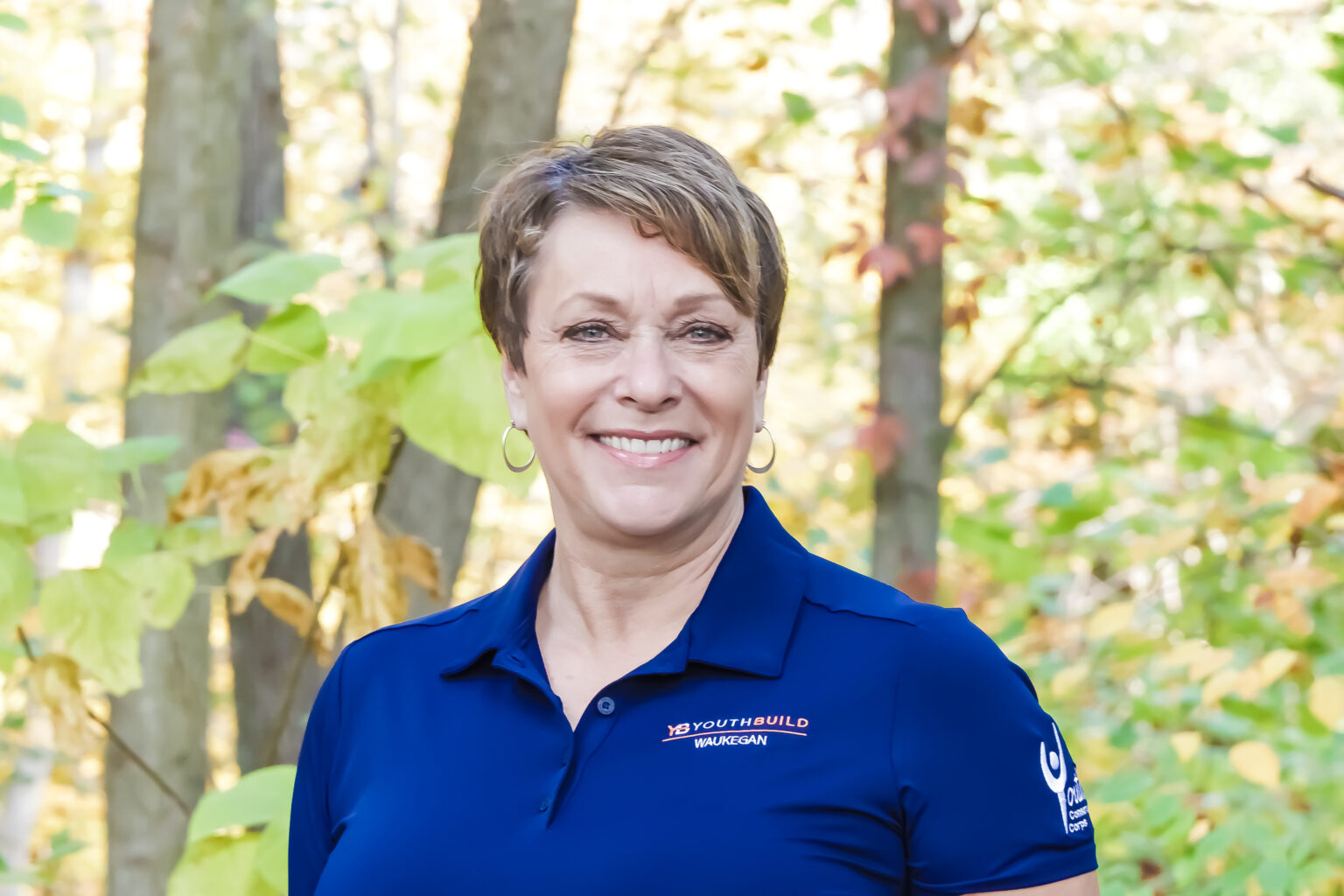
Executive Director
Jennifer is a successful executive with broad-based experience in the fields of nonprofit leadership, fundraising, marketing, community/government relations, economic development and business operations. She holds a Master’s in Business Administration and a Certification in Fundraising Management from North Park University as well as a Bachelor of Science degree from University of Illinois, Champaign-Urbana, IL with a degree in Communications.
Jennifer served for twelve years as Vice President of Marketing and Development with the United Way of Lake County and most recently as Executive Director with Zacharias Sexual Abuse Center in Gurnee and Skokie.
Jennifer was drawn to YCC because she wanted to serve the vulnerable in the area where she was born and raised and because she recognizes the importance of education and hands-on experience in the trades. In her spare time, she enjoys cycling around the Lake County Forest Preserves. Her favorite word is Courage.



