Episode 145: Mayor Nancy Rotering on Highland Park’s Future, Housing, Community, and Leadership

In Episode 145 of The Chicagoland Guide, Aaron sits down at Highland Park City Hall with Mayor Nancy Rotering for a thoughtful conversation about what makes Highland Park such a distinctive place to live, work, and raise a family. From Ravinia, Taste of Highland Park, and the city’s unique neighborhoods to housing affordability, inclusionary zoning, senior living, and the redevelopment of the former Solo Cup site, Mayor Rotering shares how Highland Park is planning for growth while staying true to its character. They also discuss civic leadership, community resilience, accessibility, and what it takes to build a suburb that remains vibrant for generations to come.


Aaron Masliansky sits down with Mayor Nancy Rotering of Highland Park at City Hall for a wide-ranging conversation about leadership, housing, placemaking, and the future of one of Chicagoland’s most distinctive communities.
Mayor Rotering, now serving her fourth term, shares the story of how a neighborhood stop sign issue first brought her into public service, and how that journey eventually led to City Hall.
In this episode, we discuss:
- How a neighborhood safety issue launched Nancy Rotering’s public service journey
- What makes Highland Park unique, from Downtown to Ravinia, Braeside, and the lakefront
- Why events like Ravinia Festival and Taste of Highland Park play such an important role in community identity and economic vitality
- How Highland Park manages traffic, transit, and visitor experience during major events
- Highland Park’s long-standing commitment to inclusionary and affordable housing since 1968
- The redevelopment of the former Solo Cup site and what it means for housing supply and the city’s future
- Housing for seniors, aging in place, and why “missing middle” housing matters
- Accessibility, disability housing, and inclusive community planning
- Historic preservation versus modern housing needs
- Highland Park’s investment in sidewalks, connectivity, and public spaces
- The future of downtown Highland Park, the Ravinia District, and neighborhood investment
- Mayor Rotering’s regional work with Chicago Metropolitan Agency for Planning and broader housing policy
Memorable quotes:
“A stop sign brought me into City Hall.”
“Housing is where jobs go to sleep.”
“A community that grows is a community that’s progressing.”
Learn more:
- Highland Park
- Chicago Metropolitan Agency for Planning
- Ravinia Festival
Listen wherever you get your podcasts, or at The Chicagoland Guide.com.
Thank you for listening to The Chicagoland Guide.
For thoughtful, data-driven insights on living, working, and investing in Chicagoland, visit thechicagolandguide.com.
Connect with Aaron Masliansky on LinkedIn for market updates and new episodes.
If you have questions, ideas, or topics you’d like covered, feel free to reach out.
If you found this episode valuable, consider subscribing and sharing it with someone who cares about Chicago and its future.
Aaron Masliansky (0:00): Welcome to The Chicagoland Guide, and I'm your host, Aaron Maslianski. Today, I am sitting in Highland Park at the City Hall with mayor Nancy Roderick, and I'm so happy to be here. Thank you so much for joining me today.
Nancy Rotering (0:13): Delighted, Aaron. Thank you.
Aaron Masliansky (0:15): You're welcome. It's nice to be back here in Highland Park, having lived here years ago. I do business around here. I love being up here. It's always fun.
Aaron Masliansky (0:23): And I think that there's just a lot of natural beauty, a lot of great things with Highland Park that make it just such a great place to be. But you've been the mayor now for a little while. What do you love about Highland Park? Why are you here and why are you the mayor?
Nancy Rotering (0:37): So I grew up at Highland Park, and it just made me who I am. It is a wonderful place to raise a family. It's a wonderful place to start a business. It's a super special community. We support one another.
Nancy Rotering (0:52): We enjoy the natural beauty, but I think really it's the people who make the place so special. So it's my honor, my privilege to be the mayor. I really enjoy it. I never planned to be the mayor. I just was a happy camper raising my family, and a stop sign brought me into City Hall, and the rest is history as they say.
Aaron Masliansky (1:11): What happened? What what happened at the stop sign?
Nancy Rotering (1:14): We didn't have one in our neighborhood, and I was a mom of four kids, and I was tired of dodging cars every day walking to and from Brayside School. And I gathered my neighbors, and we came to City Hall, and we pushed for the stop sign. In that process I realized that the City Council was mostly, sorry, old men, mostly old men and we needed some diversity. So I have a background as an attorney. I have business degree from Northwestern.
Nancy Rotering (1:42): I felt like I had the qualifications, and I am a native and love the community, and so I ran for city council and joined the group in 2009, and then ran for mayor two years later, and here we are.
Aaron Masliansky (1:56): I feel like that's a common story with people who get into politics. It's like you want to be able to make change within your community, and Right. And one little step leads to another, and here you are.
Nancy Rotering (2:05): Exactly. Exactly. I love those stories because to a person, it seems, we needed a drinking fountain, that manhole cover was waking my babies, whatever it was. Right. You hear those stories over and over again.
Nancy Rotering (2:17): The class I teach at Northwestern is Women in American Political Leadership and we hear often that it was literally just that one thing that kind of said to people, you can be the change, and then it just sort of grows from there. So you gotta love a democracy, an opportunity for people to participate.
Aaron Masliansky (2:33): You do. And I was having a conversation with my son. He's a 16 year old. He's a sophomore at Evanston High School right now, and he's in civics class. We were talking about just civics, his class was going on a field trip to the city, meeting the city manager.
Aaron Masliansky (2:47): And I was kind of just expressing what the importance is of local government. It's probably the most important form of government. People focus on the national, but really the things that start in your local community are what's the most important.
Nancy Rotering (3:00): And that's what affects you and your family. It affects your quality of life. The school board chooses what your children are going to be learning. The librarian chooses what books you're going be able to see and what books possibly you may not be able to see. The local government is making sure that your streets are safe and your water is clear and healthy and your roads are able to be managed even in the worst of conditions, and it's important to know that that's really where the rubber meets the road, so.
Unknown Speaker (3:27): Literally. Right.
Aaron Masliansky (3:29): Yes. Highland Park, I think what's great is there's so many different neighborhoods within Highland Park. You have Ravinia District, have Downtown, you have West Highland Park, you have, know, by Park Avenue, there's a lot of different diversity of people, diversity of neighborhoods, character, which I think is really fun. And some of the things that happens around the area are the different type of events that you do. So, like I know Taste of Highland Park is coming up, and then there's all the festivals around Ravinia, in the Ravinia District.
Unknown Speaker (4:02): Tell us a little bit about that. Like, how does that make the place?
Nancy Rotering (4:06): It truly does make the place. And what I love about our events is the diversity, the opportunities for all ages, all tastes, no pun intended. But if you look at where food is coming from, the different restaurants, they are running the gamut from India to Ukraine to Michael's Hotdogs to Mexico. It really is a broad range of opportunities for people to celebrate their own cultures and also learn about other cultures. And then the music also is a big part of all of that.
Nancy Rotering (4:37): So whether you're celebrating at Ravinia Festival formally or hearing great nineties bands at the Taste of Highland Park or picking your newest favorite band at the Bitter Jester Music Festival, this is the place to be in the summertime. And we use that phrase broadly, I would say, from June pretty much through October because you really wanna have the best of all the seasons. But it's it's wonderful. The Art Fest is another wonderful opportunity. The Port Clinton Art Festival in late August.
Nancy Rotering (5:08): People can come see juried art, have the children's art section be available to them. And really, to me, my favorite part is just connecting with old friends and neighbors. You take a stroll, you see some amazing art, maybe grab a bite to eat at a local restaurant, and connect with your neighbors. It's just wonderful.
Aaron Masliansky (5:26): Yeah, it gives you that type of opportunity where, you know, I think one of the most important things that we humans have is just to be able to have friendships and be able to get out there. And I think like during COVID that kind of stifled everything and to be able to go out and have these different activities are really fantastic. Just to let people know for the Taste of Highland Park, it's June in Port Clinton Square.
Nancy Rotering (5:50): Right, right. So, and the music will be there, and we've got some family friendly bands coming as well, so we've expanded and we're gonna have more family entertainment earlier in the day. Bring the kids and then come back later and have a date night. It's a lot of fun.
Aaron Masliansky (6:03): Yeah, it'd be awesome. And I think also, you know, I got to feature Ravinia on this podcast last year, and I know they're doing such a terrific renovation, and that's gonna be opening up and all the different things that happen there. And he talked about, like, different events and destination. And what I found interesting in that interview was to learn about how Ravinia was an amusement park when it first opened.
Unknown Speaker (6:25): Isn't that wild? Yeah. That they had a baseball field, and then they had a casino. It's been around
Unknown Speaker (6:30): know that.
Nancy Rotering (6:31): Yep. In in a minute. I mean, it just is the highlight, I think, for Highland Park. Not only that we have this long history, but, again, the breadth and depth of music that comes through for so many of us, sort of our first memories of of live music is going to Ravinia as as little kids and
Unknown Speaker (6:49): Sure.
Nancy Rotering (6:49): Learning how to conduct an orchestra, better understanding classical music, learning and understanding, you know, the broad range of what music is, and that they do unbelievable work with the local schools, but also with schools as far as Waukegan and down into the city and North Lawndale with their Reach, Teach, Play program. They are very much committed not just to entertainment, but also to the education and the opportunities that come from music learning.
Aaron Masliansky (7:18): Yeah. And it makes Highland Park relevant because you have all these people coming here. As mayor, I'm sure that you probably deal with complaints or things like that that happen, but maybe
Unknown Speaker (7:28): It's maybe sunny in Highland Park.
Unknown Speaker (7:30): Right. Yeah. Exactly. I'm sure. But when the traffic management to get in and out of Ravinia, it's really, like, pretty good.
Unknown Speaker (7:41): Like, how do It's outstanding. It's out like, I've never seen a place, like, handle it that well.
Nancy Rotering (7:45): And and as as a neighbor of Ravinia, I don't live far from the park, so I know, you know, oh, it's tonight as Snoop Dogg. Don't go that way. But, you know, Metro provides free tickets. So if you have a ticket to Ravinia, you can ride the train for free, which is huge. And then, also, we have parking in Downtown Highland Park and free shuttles to Ravinia.
Nancy Rotering (8:06): So it's it's been managed very well. It's interesting. You said you live in Evanston when the whole Ryan Field question was coming up, and people were freaking out and talking about parking and Wilmette and in Evanston. I said to them, come talk to us. We've got it figured out.
Nancy Rotering (8:20): Yeah. So we offered our advice and hopefully they'll take it because everybody benefits from having these opportunities to gather together.
Aaron Masliansky (8:27): Yeah. Absolutely. And I I think to take it there, it that I think is gonna be a huge boost to the area. It's not like there wasn't a stadium there before, but to be able to use it more frequently and to be able to handle it and manage it properly, I think, is the key. And and yet your Highland Park is great, fantastic example of how to do it right.
Nancy Rotering (8:46): Kudos to our police and our neighboring communities also who help with providing the the manpower, our public works folks. We have a great group, and they have it down to a system.
Aaron Masliansky (8:57): Yeah. They really do. Now one of the things I want to talk about that's been a big focus of mine on this podcast is really talking about housing developments and things that have been going on around the area. And I saw you at a CMAP event recently talking about housing in Lake County and coming up with a whole plan of how do you handle the need for housing. And there's definitely some areas that have more affordable housing in Lake County than others, and the need to be able to manage that and be able to spread it out to everybody.
Aaron Masliansky (9:30): So what are some of the new projects that Highland Park is doing, and how are you addressing the housing crisis?
Nancy Rotering (9:37): That's a huge point nationally, not just regionally. And it's important to know that since 1968, Highland Park's been committed to affordable and inclusionary housing. So this isn't a new thing for us. We've been committed for decades. The Chicago Metropolitan Agency for Planning or CMAP did this Lake County Housing Summit, and it was a great opportunity for subject matter experts across the board to gather together, to come up with synergies, to figure out new answers to this long standing problem.
Nancy Rotering (10:09): In Highland Park, we've always had for many, many years requirements related to new developments that they have to incorporate affordable housing units. And then more recently, we're super proud of the development that's coming to what was the old site of the Solo Cup factory. Now I believe it's 221 new housing units are coming in geared towards families, families, geared more towards the middle market, and providing sort of that that missing piece that we've been looking for. But I think it's important to note that in Highland Park, there's a huge range of housing, and we are super committed to making sure that people of all economic stripes are able to live here, raise their families here and then age here because we know that for a lot of people aging in place is super important. That's part of who we are as a community.
Nancy Rotering (10:59): They may not have the funds, they may need the equity out of their house, so how do we provide for them as well and make sure grandma and hopefully grandpa can stick around but not necessarily have the financial burden. So that's been a long standing commitment of ours. I'm really proud of what we've achieved and I know that we have more that we're looking at. Stay tuned.
Aaron Masliansky (11:19): Yeah. What are some of the things that you do to actually help seniors to be able to stay in their house? Are there subsidy programs?
Nancy Rotering (11:25): Well, there are state and county based subsidy programs as well as we have a couple of buildings that are affordable for seniors. Yeah. But we also increased our density of our downtown, so that gave us the space and the ability to provide more units so that if people did wanna downsize, they have that opportunity and they can stay here. But the Moraine Township is an amazing resource. They provide LIHEAP, which is low income heating and I don't remember what the AP is.
Unknown Speaker (11:53): Do you?
Unknown Speaker (11:54): I don't remember.
Nancy Rotering (11:57): Heating, electricity, air, maybe. I don't know. Whatever it is to help you know, take some of the burden off of people who are on fixed incomes. And it's important to note as well that this city council, when we are making our budget decisions, when we're looking looking at how we are going to be using tax dollars, that is the one thing that many of us bring up with regularity is, let's not forget the seniors who are on fixed incomes. They need to be remembered when we're talking about addressing the various needs that the community has through tax dollars.
Nancy Rotering (12:29): We're proud to have low cost water. We produce water and we sell it to five other communities. And we are doing our best also through our senior center to give people the ways to stay connected. Loneliness has become an epidemic in this country, especially for seniors.
Unknown Speaker (12:45): Sure.
Nancy Rotering (12:46): So we have a lot of services for our seniors. And as somebody who graduated from the high school, vowed never to return, came back as mayor to raise my family, lives in a house that now has the fourth generation, I'm planning to stick around and make sure that I also get to use those wonderful senior services.
Unknown Speaker (13:02): Absolutely. You get the full gamut
Unknown Speaker (13:03): of Exactly.
Aaron Masliansky (13:04): All the benefit. You're getting your money's worth. Well, I think the the Solo Cup Factory redevelopment is just I'm so excited that it's actually for sale product, selfishly, but I think it's, think it's such, there's such a need out there for people who are looking to buy homes and they can't find is.
Unknown Speaker (13:22): And
Aaron Masliansky (13:24): I was talking with Johanna Naiden, who's Community Development Director at Village of Skokie about a week ago, and had her on the show and we were talking about the different challenges in Skokie. Here I think it's similar. It's how do you help seniors? How do you get enough housing for people? But one of the things that we talked about is just aging infrastructure and the aging housing stock that's So the fact that there's new, like sometimes people say, Oh, the new houses are built horribly and nothing like an old house.
Aaron Masliansky (13:55): And me as a professional going into a million different houses over the years and seeing the difference between a new house and an older one, it's night and day. The new house is the new technology, the safety measures, everything in there. You're not worrying about asbestos. You're not worrying about lead. With a lot of houses, there's lead based water lines coming in here.
Aaron Masliansky (14:17): All these different types of things. So the fact that there's new is great. What is Highland Park doing to be able to continue to increase the building of new housing? I know they're solo, there's different projects that have taken place in downtown.
Nancy Rotering (14:31): There have been a broad range of higher density products coming online in Downtown Highland Park by design. When I was growing up here, the population was 32,000 and change. Yeah. When I became mayor, we were 29,000. We've since gone past the 30,000, and that's intentional.
Nancy Rotering (14:48): You wanna have that opportunity for more people to live in the community. Through our increased density and zoning changes in the downtown area, that's given us a lot more flexibility. There are still a number of opportunities in Downtown Highland Park where we're looking towards new projects coming on board. But I think it's important as somebody who lives in a house that's approaching its 100 year anniversary. Historic preservation is also a priority.
Nancy Rotering (15:14): And there's like amazing architecture here. Lately, we've been highlighting some of the historic preservation that we've been doing, but also working with those homeowners and and working with our historic preservation commission to talk about how do we make it so that a new family coming in maybe has a little bit more FAR in their house so that they're and that's the the area of housing per the entire lot size for those of you who aren't in the biz. To give people that opportunity to continue to stay in these beautiful historic homes as well, but also make them more livable for new and young families. So we're proud of our housing stock. Another thing that you raised was seniors, but we're also looking at how do we improve accessibility for housing for people with disabilities?
Unknown Speaker (15:59): Sure.
Nancy Rotering (16:00): There's a great project that's coming on board. It used to be, I think it was memory care and is now going to be turned into condos for young adults living with disabilities. And having community opportunities there but also the ability for independent living. I'm very proud of that.
Unknown Speaker (16:17): Where's that gonna be?
Nancy Rotering (16:18): That is actually over by the police station at Richfield and Old Deerfield Road And so that's something that's amazing. And then you have to talk about, okay, how are we going to make the community more accessible if people have disabilities? Working through our shuttle system, we have a senior shuttle which is also available to people with disabilities. Disabilities. Keshit just came to Highland Park is a wonderful organization that provides great services to people with disabilities.
Nancy Rotering (16:46): Making those two more connected to one another but also highlighting the job opportunities and the other things that people can do to be part of and included in the community. Yeah, proud of all of
Aaron Masliansky (16:59): I think you absolutely should be. I think that the housing for people with disabilities, adults with disabilities, is a huge issue that people don't normally think about. And I know that there's a lot of houses that are like group homes that are run by different organizations, but it's hard to get those approved sometimes. Sometimes the neighbors aren't really happy about things. I've seen it professionally.
Aaron Masliansky (17:22): And there's always a question if you have a child that is gonna need to live somewhere that's gonna need more help. The fact that Keshet and at senior, the memory care facility turning into that.
Unknown Speaker (17:34): Right.
Aaron Masliansky (17:34): Are they selling that building or is the management changing it around? How is that working?
Unknown Speaker (17:39): They sold that building.
Unknown Speaker (17:40): Okay.
Nancy Rotering (17:41): And a group is investing in it. And to your point, we do have several group homes already in Highland Park. Sure. So we are very focused on inclusivity, and this will just be another piece of that amazing portfolio for people with disabilities.
Aaron Masliansky (17:55): Yeah, for sure. When I was an intern at Ville Tuskogee in 2003 in the planning department, they were looking at one of the projects that I had to work at was, what are other communities doing for inclusionary zoning?
Unknown Speaker (18:08): Mhmm.
Unknown Speaker (18:08): They were just, like, starting Did you come
Unknown Speaker (18:09): to Highland Park?
Aaron Masliansky (18:10): Well, yes. Highland I think I did come up here, and I was looking at the plans that you had here, and it was part of my report. Uh-huh. So it's definitely at the forefront of how you deal with that. Does anybody push back on that, any developers, and say, Well, we can't make the numbers work, and how and if they can't, like, how do you deal with that?
Aaron Masliansky (18:31): Do you increase density for developers to be able to add more units that are affordable?
Nancy Rotering (18:36): We they get a bonus based on the number of units and how big the PUD is. It depends. That drives a lot of that. But those who say they can't, we introduce them to those who say we can't.
Unknown Speaker (18:49): Mhmm.
Nancy Rotering (18:49): And it's like, If these guys can figure it out, you can figure it out or best of luck. But it's a very important key part of who we are and what we stand for. And I'm really proud of the work that this community has done. They also established a housing trust fund. And so if people are tearing down essentially affordable houses, that money goes into that housing trust fund and certain single family homes are purchased, the trust owns the land and the family is able to then build equity in the house, which is also a really great opportunity for folks to have that sense of homeownership, to build equity, and to be included.
Nancy Rotering (19:28): Those are scattered throughout the community as well.
Aaron Masliansky (19:30): And do you work with different, like, nonprofit developers that then build those houses?
Nancy Rotering (19:35): We work with SIPA. We work with community partners for affordable Housing, and then they are kind of the administrators who move forward on that.
Aaron Masliansky (19:43): Yeah, think that's a great It's many different solutions that we can think of and see what works is the solution, Try it.
Nancy Rotering (19:51): Right. And if it doesn't work, okay. Try something else. But be committed. And I think that's where that Chicago Metropolitan Agency for Planning Lake County Housing Summit was so important because it showed that by working together, by actually being committed to the issue, there are solutions and we can all work through whatever challenges there are regulation wise or otherwise.
Nancy Rotering (20:15): There was a great quote that came out of that summit which was housing is where jobs go to sleep. And so it's not just, oh, we're putting up people, but we are literally building our community. And I said that when we approved the Solo Cup site. I said a community that grows is a community that's progressing. We are bringing on more families.
Nancy Rotering (20:36): We are bringing on more opportunities for people to come to our great schools, to enjoy this wonderful place, to be friends, and to learn from one another. My goal is still 32,000 at least for the population.
Aaron Masliansky (20:47): Yeah, think that you could easily get there because people definitely want to live here, I'll tell you that.
Unknown Speaker (20:52): Glad to hear it. Thank you, Erin.
Aaron Masliansky (20:53): Yes, yes, for sure. And just looking at it holistically, some of the big things, what are your visions for Highland Park in terms of, like, the downtown or the different neighborhoods? If you could just have a magic wand and say, I want this to happen, what would it look like?
Nancy Rotering (21:09): Well, we have a magic wand through our city manager, and we've been talking for many years about a lot of things that actually have come into play. So one of our main downtown streets is 2nd Street, which has about $10,000,000 into the infrastructure of 2nd Street and just really made it more connected to Port Clinton Square. We created bump outs with outdoor furniture so people can get food from all these different restaurants, sit together, enjoy the evening, maybe walk over to Port Clinton, hear some music, improved accessibility for people with disabilities. We're going to continue to be doing that work both downtown and in the Ravinia District. One of my favorite projects, which has been thirteen years in the making, is a sidewalk that connects all of Sheridan Road.
Nancy Rotering (21:50): There's still a little piece that goes down to Rosewood Beach and then back up from Rosewood Beach. Very dangerous, change in grade. It's a curve. There's a ravine. People are pushing strollers in the street, and I'm like, no more.
Nancy Rotering (22:03): So thirteen years later, we are finally able to get that sidewalk there, and that we will have absolute connectivity on Sheridan Road from literally Highwood to Glencoe. I'm really excited about that. Sidewalks have been a big priority for me. We put in a bunch of sidewalks early on on Green Bay Road because that is how people connect. And if we're committed to getting people out of their cars, getting more healthy, getting to know their neighbors, that's the best way.
Nancy Rotering (22:28): It seems really simple. Right. But it's really important.
Aaron Masliansky (22:32): I think it's really important. And Highland Park is a community of resilience with what you went through on the July 4 tragedy. You stepped up on a national level to to make a country safer and the community safer. And I think by having those types of connections, builds the bonds and the healing. Right?
Nancy Rotering (22:51): Absolutely. And we're still, sadly but honestly, on that journey. And there are not just friendships, but new literal, like, families by choice that have been formed coming out of that tragedy. People who met for the first time under the most horrific and heartbreaking situations have now built bonds that will be with them for the rest of their lives. And that is part of who we are as a community.
Nancy Rotering (23:16): That's why I'm looking forward to the chance for people to connect, whether it's by strolling and walking with the dog, whether it's trying out Taste of Highland Park, connecting with one another, building new good memories as a community is really what the focus is.
Aaron Masliansky (23:31): Absolutely. Well, I think that that's a perfect way to end, and I appreciate your time today, and I hope all everyone listening really appreciates Highland Park and stop up here for the taste of Highland Park and everything else that's going on this summer.
Unknown Speaker (23:44): Can't wait to see everybody. And, of course, it is always sunny at Highland Park.
Unknown Speaker (23:49): Yes. Is. Thank you.
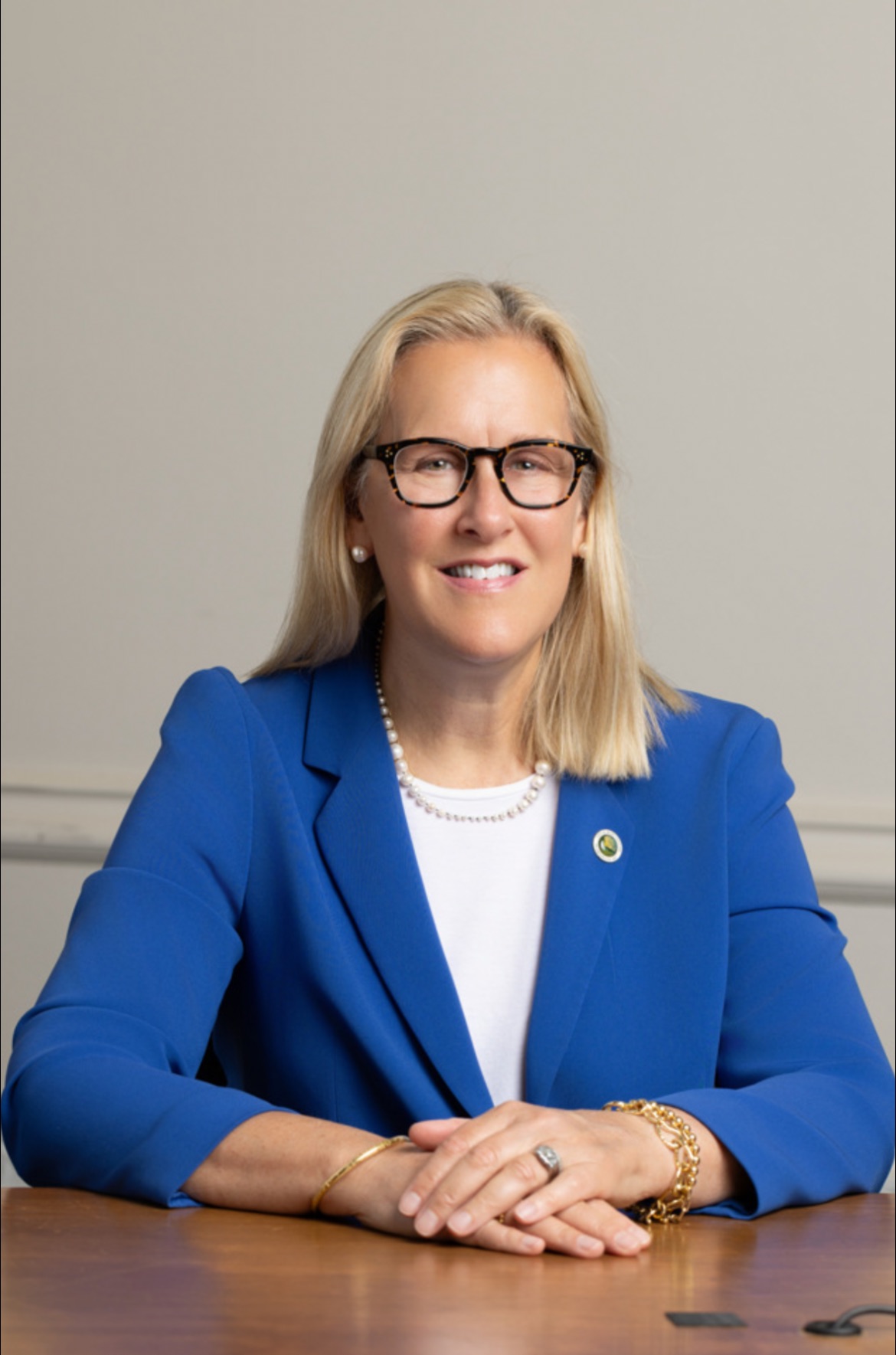
Mayor - City of Highland Park, IL
Nancy Rodkin Rotering is serving her fourth term as Mayor of Highland Park, Illinois. A longtime public servant and attorney with more than 35 years of experience, she began her legal career at McDermott Will & Emery in Chicago.
Mayor Rotering is widely recognized for her leadership on gun violence prevention and community resilience. In 2013, she led the passage of a local assault weapons ban that withstood legal challenges all the way to the U.S. Supreme Court. Following the tragic 2022 mass shooting in Highland Park, she guided the community through its grief and recovery. In 2023, after nearly a decade of advocacy, she played a key role in securing Illinois’ statewide ban on assault weapons.
She has also been a leading voice in advancing inclusion and combating hate. She spearheaded Highland Park’s year-long, city-wide Campaign Against Bullying in 2015 and brought the Hate Has No Home Here initiative to the city in 2016, resulting in the adoption of its Statement Against Hate, affirming its commitment to being an open, inclusive, and welcoming community.
Mayor Rotering serves on numerous regional and national boards. She is a Mayoral Adviser to the Strong Cities Network, a global coalition of more than 290 cities addressing hate, extremism, and polarization, and is a frequent speaker on these issues. She recently completed a term as Chair of the Metropolitan Mayors Caucus, representing Chicago and 274 surrounding communities. She also serves on the Board of the Chicago Metropolitan Agency for Planning, is a member of the U.S. Conference of May… Read More


